
How Exhibition Stand Design Can Turn Trade Show Visitors Into Customers
A successful exhibition stand does more than occupy floor space. It attracts attention, tells your brand story, encourages interaction and creates the right environment for meaningful business conversations.
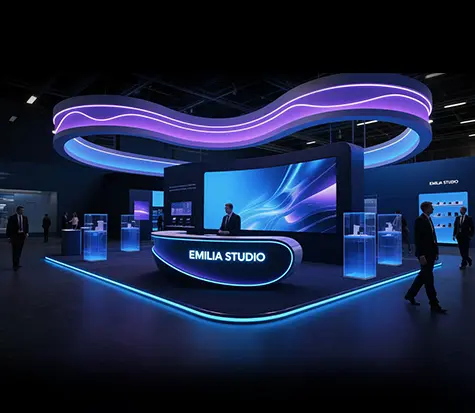
Walk into a busy exhibition hall and hundreds of brands are competing for exactly the same thing: your visitor's attention. In that environment, size alone does not make an exhibition stand effective. Strategy, spatial planning and the overall visitor experience matter far more.
Visitors often decide within seconds whether an exhibition stand feels relevant enough to explore. The architecture, lighting, messaging, graphics and product presentation all contribute to that first impression.
A professionally designed exhibition environment transforms the brand from something visitors simply see into something they can physically experience.
What Great Exhibition Design Can Deliver
Start With the Brand Story, Not the Structure
One of the biggest mistakes brands make is beginning with the question, “What should our stand look like?”
A stronger starting point is: “What should visitors understand, feel and do when they experience our brand?”
A technology business launching a new solution may need interactive demonstration areas and digital touchpoints. A premium product brand may rely more heavily on material selection, controlled lighting and carefully curated presentation.
The physical design should follow the brand objective—not the other way around.

Design for Movement, Not Just Appearance
An exhibition stand can look impressive in a render and still perform poorly once the event opens.
Why? Because real people need to move through the space.
Designers must consider visibility from the aisle, entry points, congestion, meeting areas, product displays, demonstration zones, storage and visitor exit routes.
Strong spatial and environmental design creates a natural journey. Visitors should understand where to go without having to think about it.
Give Visitors a Reason to Stop
Visibility might attract someone from the aisle, but experience keeps them there.
Experiential design can introduce interactive screens, product demonstrations, tactile installations, immersive environments, presentations or storytelling moments.
The goal should never be to add technology simply because it looks impressive. Every interaction should strengthen the brand message and help visitors understand what makes the company different.
“The best exhibition stands are not simply seen. They are explored, experienced and remembered.”
DBD Studios
Use Visualisation Before You Build
Exhibition projects move quickly, and changes become increasingly expensive once fabrication begins.
3D visualisation and design development allow clients to understand the environment before production starts.
Teams can evaluate scale, architecture, materials, lighting, branding and product placement while changes remain relatively straightforward.
Creative Ideas Must Also Be Buildable
An extraordinary concept has little value if it cannot be fabricated safely, efficiently and within the practical constraints of the venue.
Technical design bridges the gap between creative vision and real-world construction.
Detailed dimensions, materials, graphic locations, electrical requirements and construction information give fabricators the information they need to execute the design accurately.
Create One Connected Brand Experience
Visitors may already know a company through its website, advertising, social media or other campaigns.
The exhibition should feel like a physical extension of that same brand. Typography, colours, imagery, content, materials and digital experiences should work together rather than appear as separate elements.
Consistency strengthens recognition and helps visitors connect the exhibition experience with the wider brand.
Manage the Journey From Approval to Installation
Exhibition projects involve many moving parts—designers, fabricators, AV suppliers, graphic production, logistics teams, venue contractors and installers.
Project management keeps these different disciplines aligned with the original creative vision.
When design and delivery work together, the finished exhibition environment has a much greater chance of reflecting what the client originally approved.
An Exhibition Stand Is Temporary. Its Impact Doesn't Have to Be.
A successful exhibition environment combines strategy, creativity, technical expertise and careful execution.
When those disciplines work together, a stand becomes more than a temporary structure. It becomes a physical platform for storytelling, interaction and business growth.
DBD Studios brings together exhibition design, experiential design, spatial thinking, visualisation, technical development, project management and creative content to help brands create spaces people notice—and remember.
One Integrated Approach to Exhibition Experiences
Exhibition Design
Custom exhibition stands designed to tell your brand story while balancing creativity, functionality and build efficiency.
Experiential Design
Immersive environments that encourage interaction and create memorable brand experiences.
Spatial & Environmental Design
Thoughtfully planned spaces that prioritise flow, engagement and visual impact.
Visualisation & Design Development
Helping clients clearly understand the vision before the environment gets built.
Technical Design
Practical, buildable and fabrication-ready technical solutions that support accurate execution.
Project Management
Managing the journey from concept approval through production coordination and final installation.
Creative Content
Visual assets that support the exhibition experience before, during and after the event.
From First Idea to Exhibition Floor
A connected design and delivery process helps protect the original creative vision at every stage.
Understand the Objective
Define the audience, brand goals, event objectives and the commercial purpose of the space.
Develop the Concept
Translate strategy into an exhibition environment with a clear creative and spatial direction.
Visualise & Refine
Review the architecture, branding, lighting and visitor experience before fabrication begins.
Technical Development
Convert the approved concept into detailed, practical and fabrication-ready documentation.
Manage Delivery
Coordinate suppliers, production requirements and installation to support a consistent final result.
Make Your Next Exhibition Impossible to Ignore.
DBD Studios creates exhibition environments that combine brand thinking, spatial design and practical execution.